
Top Art & Design Bloggers
InstMe keeps a live ranking of art & design bloggers across platforms, drawn from an index of millions of profiles across several social networks. The typical account here averages 123K followers with a 12.83% engagement rate — real numbers from our monitoring pipeline, not a directory that quietly goes stale.
One thing worth knowing before you scroll: 90% of the creators in this segment are nano or micro accounts (under 100K followers), the tier where engagement runs warmest and collaborations cost the least. Shortlist a few names below, then open any profile for its full free report: growth trend, audience quality, benchmarks and estimated media value.
Millions
Profiles indexed across networks
123K
Avg. followers
12.83%
Avg. engagement
73%
Recently active
21.7%
Verified accounts
Top 21 creators
Ranked by followers

Дима Гордей
@dimagordey
3.7M
0.4% ER
Tetiana Kostylieva | blog.ai
@illustrator.blog_artist
1.5M
0.1% ER
Alexis Nicole | affordable home design
@alexisnicolehome
391.7K
2.2% ER
Queen of Crafting, Diva of DIY, Maker of Magic - Jennifer Marx
@jennifer.maker
307.6K
0.0% ER
kayla hadlington
@kaylahadlington
208.4K
0.4% ER
Joe Rohde
@joerohde
168.2K
0.7% ER
Gastronome
@gastroartistry
99.2K
0.4% ER

MatatuGalore
@matatugalore
97.4K
0.8% ER
YA SALAM FASHION BLOG
@yasalamfashionblog
96.2K
0.1% ER
5⭐️B💋
@interst3ll4r.x
54.6K
35.6% ER

Polymer Clay Tutorials | Polymer Clay Art
@bysandracallander
54.2K
0.2% ER
Finnabair®️Art Supplies
@finnabair_studio
51K
0.3% ER
𝐌𝐨𝐝𝐞𝐥 | 𝐁𝐥𝐨𝐠𝐠𝐞𝐫
@ania_kosyakevich
47.8K
0.6% ER
A n i t a
@anitasavelieva
45.4K
2.4% ER
INKINK Collectibles | Gallery
@inkink_collectibles
40.9K
0.3% ER
@blingingblog
@blinging_blogs
38.8K
0.3% ER
SpankyStokes
@spankystokes
37.3K
0.8% ER
𝐎 𝐏𝐨𝐳𝐝𝐧𝐢𝐚𝐤𝐨𝐯𝐚/ Visual Artist
@sasha_pozniakova
34.6K
2.7% ER
Ruben Terlouw • History
@woedans
33.7K
4.0% ER
Lucy Lu
@lucylushuang
27.4K
3.1% ER
Arlynnda
@theheinrichhouse
26.4K
0.7% ER
This is just the top of the list — millions of profiles across several social networks
Sign up free to browse the full segment, filter by size, engagement and location, and export shortlists.
Unlock the full list — free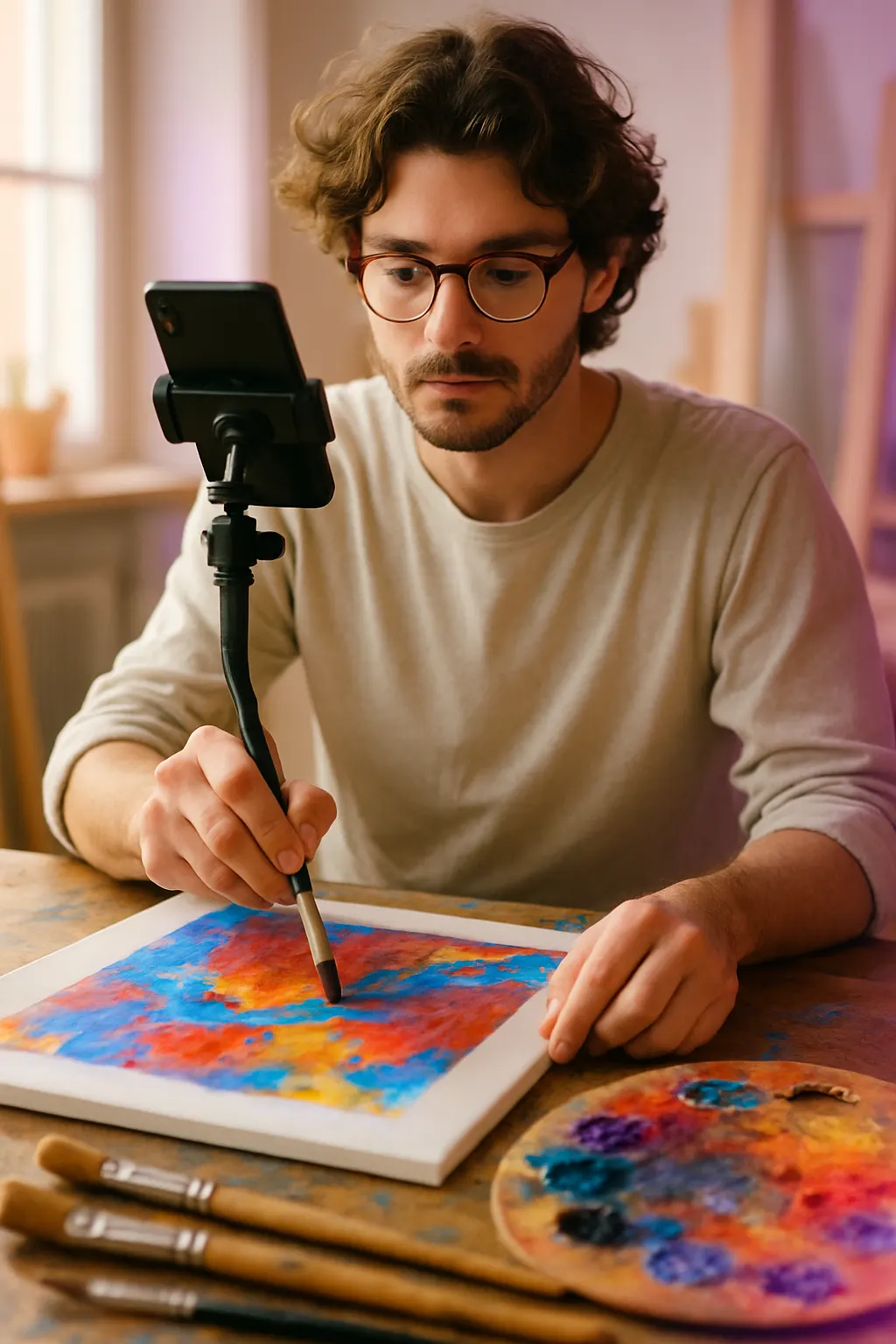
instme Top Art & Design Bloggers — ranked live
About the art & design bloggers space
Inside the art-blogger feed: sketchbooks, studio notes, and visual critique
A half-finished gouache study sits beside a stained water jar, while the caption explains why the creator switched paper and how the color palette changed after the first wash. That is typical of art bloggers: the finished image matters, but the process, choices, and interpretation often matter just as much.
This segment includes painters, illustrators, digital artists, art educators, museum and gallery commentators, craft-focused visual artists, art-history explainers, and creators who document studio practice as a lifestyle. On Instagram, they often use carousels for progress shots, Reels for timelapse work, and captions for technique notes. On YouTube, longer tutorials, studio vlogs, portfolio reviews, and art-material comparisons are common. TikTok tends to favor quick transformations, sketchbook flips, “paint with me” clips, and opinion-led commentary on trends or famous works.
Audiences come for several reasons: to learn technique, find aesthetic inspiration, understand tools before buying, follow a creator’s artistic development, or simply spend time with calming, visually satisfying content. Many followers are practicing artists, students, designers, collectors, or hobbyists, so comments can be specific and informed rather than generic.
See how it stacks up next to top art & design creators and top lifestyle bloggers before you shortlist.
Sponsorships that fit naturally into the studio workflow
Art-blogger partnerships work best when the product or message has a clear role in the creative process. Art supplies, tablets, design software, printing services, framing, creative courses, museums, books, home-studio products, and lifestyle brands with a strong visual identity can all fit, provided the integration feels useful rather than decorative.
Effective formats include material tests, side-by-side comparisons, sponsored tutorials, themed art challenges, studio setup videos, limited-edition artwork tied to a campaign, or a “from brief to finished piece” post. A brand can also commission an original illustration or ask the creator to interpret a product visually. For YouTube, deeper demos and honest review structures tend to suit the audience. For Instagram and TikTok, short process edits, carousels with takeaways, and concise voiceover explanations often carry the message more clearly.
Price is usually shaped by more than follower count. Production time can be significant if a creator is making original work, filming multiple stages, editing a tutorial, or licensing an artwork for paid media. Usage rights, exclusivity, platform mix, creative complexity, and whether the creator must buy or test materials before filming can all affect fees. A small artist with a highly relevant audience may be more valuable than a broad lifestyle account if the campaign depends on credibility with practicing creatives.
For briefs, pricing benchmarks and outreach templates, read our guide to creator marketing for your business.
Reading an art creator’s metrics without losing the creative context
The art-blogger segment has an average follower count of 133,026 and an average engagement rate of 7.05%, with 23.8% verified share across the provided aggregate. The size mix is weighted toward smaller accounts: nano creators represent 46% and micro creators 36%, while mid, macro, and mega accounts make up smaller shares. That structure matters because art audiences often form around taste, technique, and trust rather than mass visibility alone.
Engagement should be read qualitatively. Saves and shares are useful signals for tutorials, reference posts, and educational carousels. Comments that mention materials, technique, composition, or personal attempts at the method are stronger than short praise repeated across many posts. For video, watch time indicators, completion behavior, and whether viewers ask follow-up questions can reveal if the content is teaching or merely attracting quick views.
Red flags include inconsistent art ownership, unclear use of references, undisclosed AI-assisted output when process authenticity is central, sudden engagement spikes unrelated to content changes, repetitive low-effort captions, or a feed that shifts styles too often for a brand to understand the creator’s audience. Also check whether sponsored posts maintain the same level of craft as organic work.
Current trends include sketchbook intimacy, traditional-media revival, digital workflow transparency, art-business advice, gallery-going content, and short videos that show mistakes as part of the final result. The strongest creators make their process legible without flattening the work into a generic tutorial.
Skip the manual checks — InstMe's influencer search platform surfaces these signals automatically in every free report.
Market snapshot
How this segment breaks down by account size and platform — updated Sep 19, 2026.