
Top Food Creators on Instagram
InstMe keeps a live ranking of food creators on Instagram on Instagram, drawn from an index of millions of profiles across several social networks. The typical account here averages 118.9K followers with a 9.11% engagement rate — real numbers from our monitoring pipeline, not a directory that quietly goes stale.
One thing worth knowing before you scroll: 84% of the creators in this segment are nano or micro accounts (under 100K followers), the tier where engagement runs warmest and collaborations cost the least. Shortlist a few names below, then open any profile for its full free report: growth trend, audience quality, benchmarks and estimated media value.
Millions
Profiles indexed across networks
118.9K
Avg. followers
9.11%
Avg. engagement
74%
Recently active
30.0%
Verified accounts
Top 21 creators
Ranked by followers

Britney Spears
@britneyspears
41.8M
0.1% ER

TiaMowry
@tiamowry
12.6M
1.4% ER

Taylor Lautner
@taylorlautner
11.3M
9.6% ER

Jamie Oliver
@jamieoliver
10.7M
0.6% ER

Betul Tunc
@turkuazkitchen
10.6M
0.7% ER
tastyuk
@tastyuk
10M
0.0% ER

Pamela Reif
@pamela_rf
8.7M
0.6% ER

Ulhas Maruti Kamathe
@ulhaskamthe
7M
0.1% ER
Kian Hiatt
@cookingwithkian
6.9M
6.3% ER

Vikas Khanna
@vikaskhannagroup
6.6M
0.3% ER
Tiny Chef
@thetinychefshow
6.5M
1.1% ER
Love_Food
@love_food
5.8M
0.1% ER

Misha Collins
@misha
5.4M
1.9% ER

ALFIE STEINER
@alfiecooks
5.1M
0.4% ER
Mediterranean Diet Plan 🇺🇸
@mediterranean.diet.plan
5M
1.5% ER

Valentina Nappi
@instavalentinanappi
5M
0.2% ER

JENA
@jenafrumes
4.9M
0.3% ER
Ahmad Alzahabi
@thegoldenbalance
4.8M
0.8% ER
Yumna
@feelgoodfoodie
4.8M
1.9% ER
Charlotte de Witte
@charlottedewittemusic
4.7M
0.9% ER

Ranveer Brar
@ranveer.brar
4.7M
0.1% ER
This is just the top of the list — millions of profiles across several social networks
Sign up free to browse the full segment, filter by size, engagement and location, and export shortlists.
Unlock the full list — free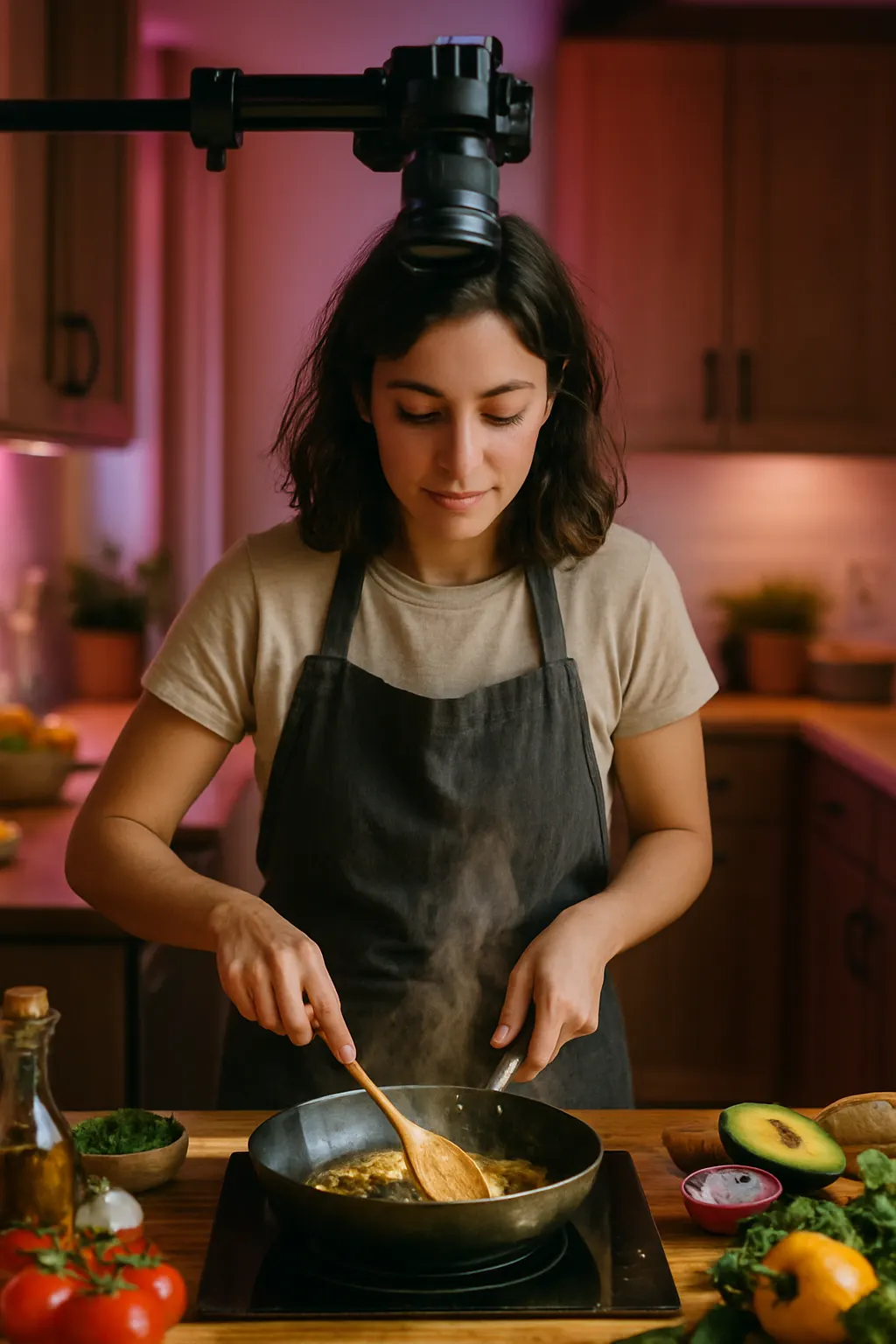
instme Top Food Creators on Instagram — ranked live
About the food creators on instagram space
From overhead recipes to restaurant-table close-ups
A typical post might start with butter foaming in a pan, cut to a quick knife shot, then finish with a fork breaking into the final dish. On Instagram, food creators turn meals into compact visual stories: Reels for step-by-step recipes, carousels for ingredient lists, Stories for polls and behind-the-scenes cooking, and static posts for polished plating or restaurant finds.
This segment includes home cooks, bakers, meal-prep creators, nutrition-minded recipe developers, restaurant reviewers, coffee and cocktail specialists, street-food scouts, and creators focused on regional cuisines. Some are highly produced, with controlled lighting and styled kitchens. Others feel casual, filming in small apartments, local markets, or at a neighborhood table.
Audiences come for practical ideas as much as appetite appeal. They save weeknight recipes, compare brunch spots, learn shortcuts, and look for dishes they can recreate or order. The strongest Instagram food accounts often balance sensory content with utility: clear ingredients, visible texture, timing cues, substitutions, and captions that make the recipe easy to return to later.
Benchmark it against top food creators on Instagram in the USA and top creators on Instagram, ranked from the same live index.
Sponsored dishes, product trials, and restaurant visits that fit the feed
Food partnerships work best when the product has a natural role in the creator’s routine. A sauce appears inside a recipe rather than beside it. A cookware item is used across the process, not only held at the end. A restaurant partnership shows the room, the ordering experience, and the dishes with enough context for followers to judge whether it suits them.
Common formats include dedicated Reels, recipe integrations, limited-time menu announcements, Story sequences with links or question stickers, carousel recipe cards, grocery hauls, and seasonal cooking themes. For packaged food and kitchen products, repeat usage can be more persuasive than a single reveal. For restaurants and hospitality, location relevance matters: an audience concentrated near the venue is often more valuable than a broad audience with little intent to visit.
Performance is usually driven by appetite appeal, clarity, and trust. Close-up texture shots, short ingredient lists, realistic prep time, and a clear reason to try the item all help. Pricing tends to rise with production quality, audience fit, usage rights, exclusivity, recipe development effort, location travel, turnaround time, and whether the creator must test, shoot, edit, and publish across multiple placements.
Turn this research into results with our step-by-step guide to influencer marketing for food & beverage brands.
Signals that separate useful food influence from empty reach
Instagram food accounts should be judged on more than follower count. In this segment, saves, shares, comments with intent, Story responses, and Reel completion signals can show whether followers are actually using the content. The aggregate benchmark for this segment includes an average engagement rate of 5.37% and average follower count of 146,350, but individual fit depends heavily on cuisine, location, posting style, and audience behavior.
The account-size mix is weighted toward smaller creators: nano accounts make up 47% and micro accounts 38%, while mid accounts are 9%, macro accounts 3%, and mega accounts 3%. That matters because smaller food creators can have very focused communities, especially around a city, dietary preference, or cooking style. Larger accounts may offer broader awareness, but engagement quality and audience relevance still need careful review. Verified accounts represent 30.3% of the segment, which can be a useful trust signal, though not a substitute for content analysis.
Red flags include recipes that do not show the finished texture clearly, captions that omit key details, inflated comment sections with generic praise, repetitive sponsored posts, poor disclosure, and food claims that overstate health benefits. For restaurant creators, watch for feeds that look like paid listings rather than lived-in recommendations.
Current trends favor short Reels with fast payoff, budget meals, high-protein or dietary-specific recipes, comfort food with a visual twist, local discovery, and transparent taste testing. Strong creators make the viewer hungry, but they also make the next step obvious.
You don't have to check these by hand: InstMe's influencer discovery platform bakes them into every free report.
Market snapshot
How this segment breaks down by account size — updated Sep 19, 2026.