
Top Art & Design Brand Ambassadors
Looking for art & design brand ambassadors? You're in the right place. This page ranks the segment's standout accounts by reach, pulled from InstMe's index spanning millions of profiles across several social networks. Creators here average 340.5K followers and 6.82% engagement, and the list quietly refreshes itself as our pipeline rescans profiles.
Beyond the ranking, the market snapshot further down breaks the segment into account sizes and platforms, so you can tell at a glance whether this niche is dominated by big established names or fast-moving smaller creators. Every profile links to a full free report.
Millions
Profiles indexed across networks
340.5K
Avg. followers
6.82%
Avg. engagement
85%
Recently active
36.4%
Verified accounts
Top 21 creators
Ranked by followers
Kat Graham
@katgraham
10M
0.3% ER

Aseel | أسيل
@aseel
6.5M
0.2% ER
Nia Long
@iamnialong
5M
1.1% ER
luna 🐈⬛
@escanialuna_
1.6M
5.6% ER

Sophie ✨
@sophiealakija
1.3M
3.0% ER

Ari Wibowo
@ariwibowo_official
1.1M
0.3% ER

Sani Musa Danja
@realsanidanja
1.1M
0.2% ER

Nikita Gill
@nikita_gill
841.3K
1.8% ER

E L O⚡️O N A M
@elozonam
797.9K
1.1% ER
Pretty P
@msprettyp_
742.6K
6.4% ER

Rory
@rorykramer
673.1K
2.1% ER
⠀⠀⠀ ⠀ Larisa Love™
@larisadoll
520K
0.5% ER
SALMA
@salmaslims
362.9K
0.3% ER

Ben Labuzzetta
@ben.labuzzetta
348.1K
1.7% ER
Kiley Busko
@painted_wing
225.7K
0.5% ER
Alex Kwiatkowski
@alexkwiatkowskiii
137.4K
2.1% ER
Emre Yetkin
@skunkkie
135.8K
0.5% ER
Daniel Wilson
@dwilsonarts
133.6K
0.9% ER
C L A N D E S
@clandesmusic
117.7K
0.6% ER
Ricardo Drue
@itsdrue
113K
5.1% ER
Amber Tyldesley
@amber_tyldesley_art
111.4K
0.6% ER
This is just the top of the list — millions of profiles across several social networks
Sign up free to browse the full segment, filter by size, engagement and location, and export shortlists.
Unlock the full list — free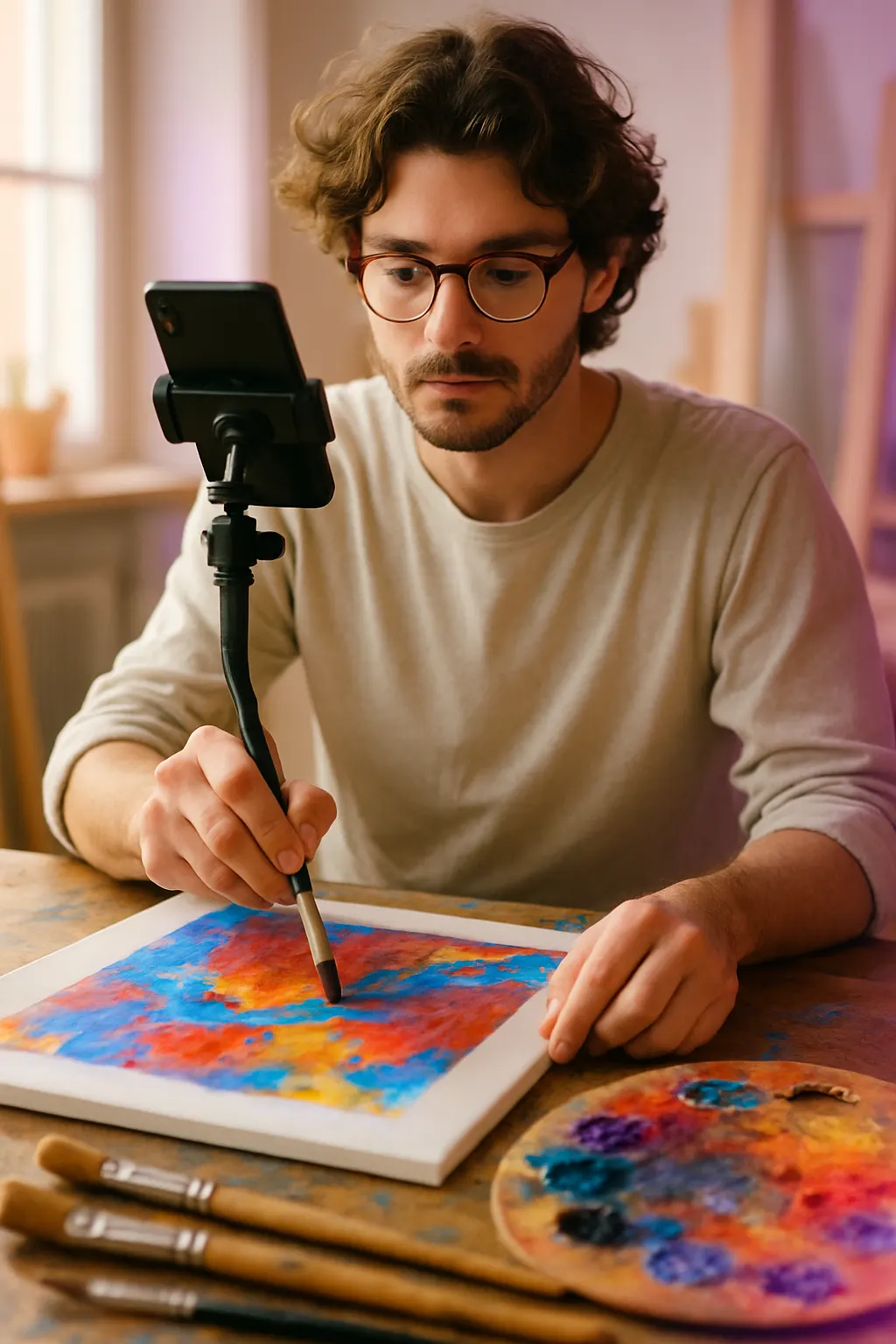
instme Top Art & Design Brand Ambassadors — ranked live
About the art & design brand ambassadors space
What art ambassador accounts actually cover
Art brand ambassadors range from practicing painters, illustrators, muralists, digital artists, sculptors, calligraphers, craft-focused makers, art educators, and studio vloggers to gallery-facing creators who discuss exhibitions, collecting, framing, and artist tools. The common thread is not only finished artwork, but repeatable trust: audiences follow because they want to see process, materials, taste, technique, and the creator’s judgment over time.
Content usually falls into a few recognizable formats. On Instagram, creators often use Reels for process clips, carousels for step-by-step breakdowns, and Stories for studio updates, polls, supply links, and event reminders. YouTube is stronger for longer demonstrations, sketchbook tours, product comparisons, studio setup videos, and course-adjacent education. TikTok tends to reward quick transformations, satisfying process edits, artist commentary, and personality-led behind-the-scenes posts.
Audience intent is practical and emotional at the same time. Some followers are artists looking for materials, software, prompts, tutorials, or workflow advice. Others are collectors, design-minded shoppers, students, or fans of a specific visual style. Ambassador fit depends on which audience is dominant: a watercolor educator can move art-supply consideration differently from a muralist with local cultural relevance or a digital illustrator whose followers care about tablets, brushes, and print drops.
See how it stacks up next to top art & design creators and top fitness brand ambassadors before you shortlist.
What sells the partnership before the format is chosen
Visible proof performs best: a recognizable before-and-after, a tool clearly changing the result, a creator explaining why a material fits their workflow, or an artwork that audiences can watch come together. The strongest ambassador posts do not feel like a product interruption; they make the product part of the studio decision-making.
From there, the format should match the buying moment. For discovery, short Reels or TikToks showing texture, color payoff, speed, packaging, or a striking final piece can work well. For consideration, YouTube reviews, comparison videos, and in-depth tutorials give the creator room to explain trade-offs. For retention, ongoing ambassador programs can use recurring studio diaries, monthly challenge prompts, limited-edition drops, live Q&A announcements on Instagram Stories, or a sequence of posts tied to one larger body of work.
Art partnerships also benefit from letting creators retain their visual language. Over-scripted talking points can weaken credibility, especially when audiences know the creator’s usual materials and methods. Useful briefs define the product claims, usage requirements, deadlines, and disclosure language, while leaving room for the creator’s composition, palette, pacing, and honest context.
Pricing is usually influenced by audience size, engagement quality, platform mix, production effort, exclusivity, usage rights, timeline, and whether the brand needs original artwork, licensing, event attendance, tutorials, or multi-post continuity. A creator making a finished piece from scratch is not delivering the same workload as a simple mention.
For briefs, pricing benchmarks and outreach templates, read our guide to creator marketing for your business.
Reading the signals in art ambassador profiles
Follower count matters, but art audiences often reward specificity more than scale. In this segment, the average follower count is 380,121, the average engagement rate is 4.68%, and 47.5% of profiles are verified. The account-size mix is broad: nano accounts make up 33%, micro 37%, mid 16%, macro 5%, and mega 9%. That spread makes it important to compare creators by role, not just size. A smaller art educator with active comment threads may be more valuable for a niche supply brand than a larger entertainment-style account with passive viewers.
Useful metrics include engagement rate, comment substance, saves, shares, video completion signals where available, Story interaction, link behavior, and consistency across recent posts. For art ambassadors, comments are especially revealing: look for followers asking about brushes, paper, software, framing, classes, commissions, prints, or where to buy. Those questions show purchase intent and trust.
Red flags include repetitive sponsored posts with little original artwork, sudden style shifts that make product use look unnatural, low-effort AI-looking process content without transparency, mismatched audiences, inflated engagement from generic comments, and creators who rarely respond to technical questions. Also check whether the creator has recently promoted competing products in a way that would conflict with an ambassador role.
Current content trends favor transparent process, material testing, studio realism, short educational voiceovers, sketchbook and art-challenge formats, tactile close-ups, and creator-led storytelling about why a piece was made. Strong candidates can connect those trends to a brand without making the work feel secondary to the ad. InstMe can help compare these signals across Instagram, YouTube, and TikTok profiles in one review workflow.
Skip the manual checks — InstMe's influencer search platform surfaces these signals automatically in every free report.
Market snapshot
How this segment breaks down by account size and platform — updated Sep 19, 2026.