
Top Art & Design UGC Creators
This is InstMe's live ranking of art & design ugc creators: creators measured on audience size, engagement and posting activity, surfaced from an index of millions of profiles across several social networks. Averages for the segment right now: 33K followers and 15.15% engagement.
Brands usually start at the top of the list, but the best opportunities often hide a little deeper — smaller creators here out-engage the big accounts more often than not. Open any profile for its full free report, or create a free account to search, filter and export the entire segment.
Millions
Profiles indexed across networks
33K
Avg. followers
15.15%
Avg. engagement
63%
Recently active
15.6%
Verified accounts
Top 15 creators
Ranked by followers
MR. H I E L O 🥶 ❄️ 🧊
@icetamarez
25.5K
1.3% ER

Denys | Content Creator & Art Director
@di_nossa
19K
32.1% ER
Sakchhi
@maskey.sakchhi
13.4K
1.1% ER
Jefe_LA
@perfect10_bigjefe
11K
5.4% ER
Leela Harris
@leelaharris
8.9K
0.7% ER
Соня
@sonyalekler
8.9K
5.8% ER
izzy💋
@izzyhiersche
8.8K
2.2% ER
🌴Cover Boy Taitt🌴
@fadedintheyo
6.9K
0.0% ER

⛬ meron ⛬
@meronsiyoum
4.4K
6.1% ER
Inna Posokhova • UI/UX Designer
@inna_posokhovaa
4.2K
0.9% ER
Ursula
@ursulacallejo
3.6K
100.0% ER
Kylie Klein 🌹🌙 Curve Model ♡ Denver
@kyliemklein
3.1K
4.7% ER
Daniela Soto 🫧 | Content Creator ✨
@daniela_stz
2.3K
2.6% ER
Alyona | Artist & UGC Creator | Motherhood & Lifestyle
@alyonashcherba
1.3K
0.0% ER
Binura stylist ,costume designer
@u.bilibi
1.1K
1.5% ER
This is just the top of the list — millions of profiles across several social networks
Sign up free to browse the full segment, filter by size, engagement and location, and export shortlists.
Unlock the full list — free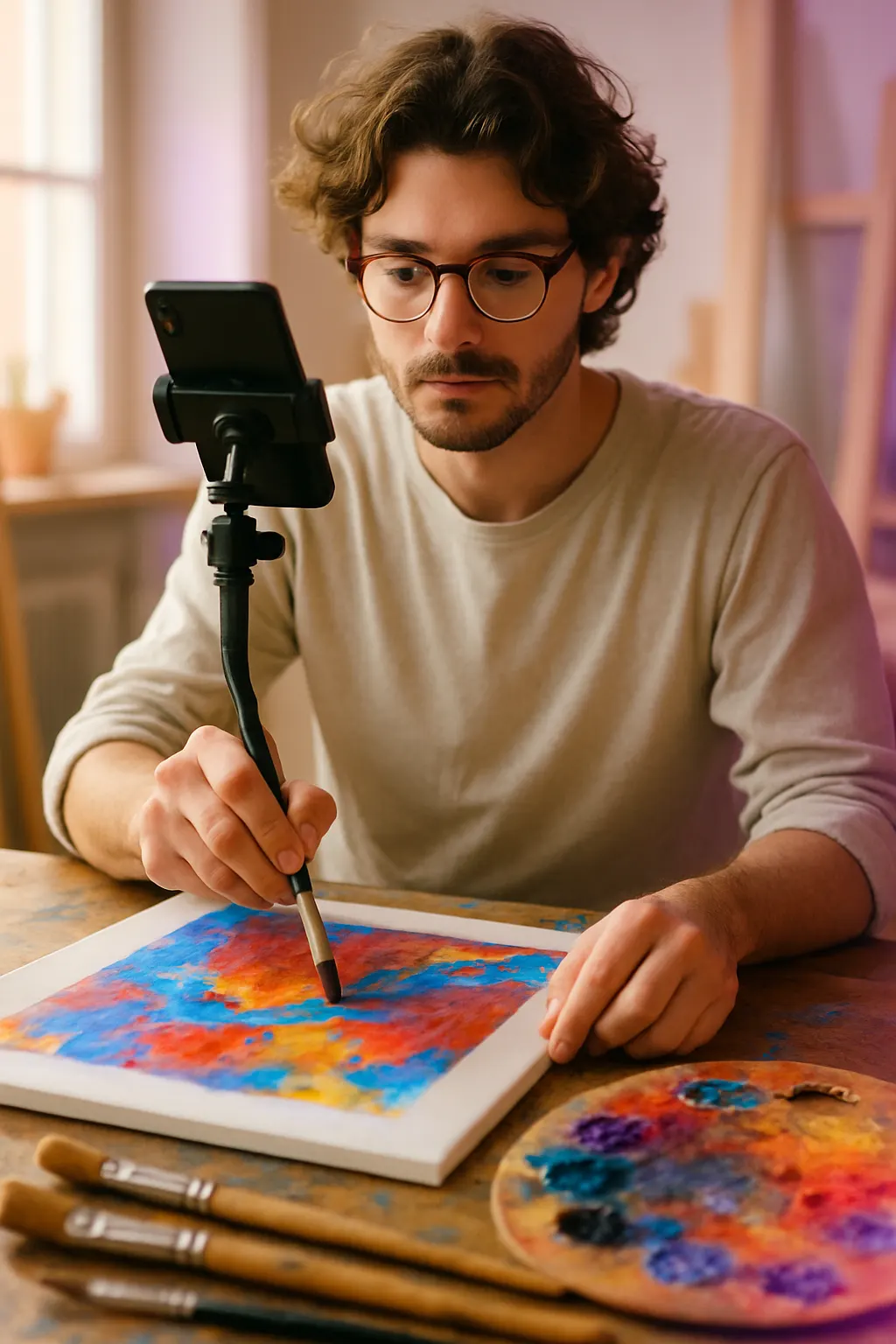
instme Top Art & Design UGC Creators — ranked live
About the art & design ugc creators space
What art audiences expect from UGC-style creator content
Viewers come to art UGC creators for process, proof, and practical inspiration. They want to see materials in use, mistakes being fixed, sketchbook pages filling up, color choices tested, and finished work shown in a way that feels reachable rather than staged. The appeal is often less about gallery polish and more about watching a creator turn a tool, surface, prompt, or technique into something visually satisfying.
This segment includes illustrators, painters, calligraphers, digital artists, craft artists, mixed-media makers, muralists, art journaling creators, and hobby-to-pro creators documenting their workflow. Common formats include time-lapse reels, before-and-after transformations, product trials, studio desk setups, art supply hauls, tutorial snippets, packaging clips, commission walkthroughs, and “draw with me” videos.
Typical archetypes range from calm studio creators with highly aesthetic visuals to experimental makers who test supplies honestly, educators who simplify techniques, and relatable hobbyists whose strength is approachability. Audiences often follow for creative motivation, technique discovery, product confidence, and the pleasure of watching a blank page become a finished piece.
See how it stacks up next to top art & design creators and top lifestyle ugc creators before you shortlist.
Partnerships that fit naturally into an art workflow
Art viewers respond best when a sponsorship feels like part of the making process, not an interruption before or after it. A brush, tablet accessory, paper, paint set, printer, frame, storage item, course, or creative app performs better when the creator shows how it changes the final result or solves a real studio problem.
Effective collaborations often use process-led formats: first-impression tests, side-by-side material comparisons, challenge prompts, “one product, three outcomes,” studio organization upgrades, tutorial integrations, and unboxing that quickly moves into actual use. On Instagram and TikTok, short-form visual transformation is especially important; on YouTube, longer tutorials, review videos, and studio vlogs can support more detailed explanation.
What tends to perform is evidence. Viewers want to see pigment payoff, paper texture, blending, drying time, brush control, app features, print quality, or packaging durability. For marketers, strong briefs usually define the product benefit but leave room for the artist’s own style, since over-scripted art content can feel disconnected from the creator’s visual language.
Pricing is typically influenced by audience relevance, production effort, usage rights, exclusivity, platform mix, turnaround demands, and whether the creator must produce original artwork for the campaign. A creator making a custom illustration, filming multiple stages, and delivering paid-media-ready assets is providing more than a simple post.
For briefs, pricing benchmarks and outreach templates, read our guide to creator marketing for your business.
Signals of credibility in art UGC creators
Art audiences are quick to notice whether a creator genuinely uses the tools and techniques they discuss. A polished feed matters, but consistency of process matters more: repeated original work, visible hands-on creation, clear explanations, and comment sections where viewers ask specific questions about supplies, settings, or technique.
For marketers assessing this segment, engagement quality should be weighed alongside audience size. The aggregate average engagement rate for art UGC creators is 7.40%, with an average follower count of 40,966; the account-size mix is heavily weighted toward nano creators at 51% and micro creators at 37%, with mid-sized accounts at 12%. That distribution makes smaller creators especially relevant for brands that need authentic product demonstrations, niche technique credibility, or reusable UGC assets rather than broad awareness alone. The verified share is 19.6%, so verification can support trust but should not be treated as the main quality signal.
Useful metrics include saves on tutorials, replays on time-lapses, completion rates on process videos, comment specificity, audience location, past branded-content performance, and the creator’s ability to adapt the same concept across Instagram, TikTok, and YouTube. Strong art creators often generate comments about exact materials, color names, settings, paper types, or where to buy supplies.
Red flags include repetitive AI-looking outputs with no process shown, unclear disclosure history, unusually generic comments, frequent unrelated sponsorships, copied trend formats with little original work, or videos where the product appears only briefly. Current trends favor tactile process footage, desk-level filming, sketchbook realism, supply-testing honesty, cozy studio routines, digital-to-physical workflows, and short educational clips that give viewers one usable idea rather than a broad tutorial.
Skip the manual checks — InstMe's influencer search platform surfaces these signals automatically in every free report.
Market snapshot
How this segment breaks down by account size and platform — updated Oct 15, 2026.