
Top Parenting & Family Podcasters
This is InstMe's live ranking of parenting & family podcasters: creators measured on audience size, engagement and posting activity, surfaced from an index of millions of profiles across several social networks. Averages for the segment right now: 213.4K followers and 7.24% engagement.
Brands usually start at the top of the list, but the best opportunities often hide a little deeper — smaller creators here out-engage the big accounts more often than not. Open any profile for its full free report, or create a free account to search, filter and export the entire segment.
Millions
Profiles indexed across networks
213.4K
Avg. followers
7.24%
Avg. engagement
72%
Recently active
51.7%
Verified accounts
Top 21 creators
Ranked by followers

BONNIE WRIGHT
@thisisbwright
3.8M
0.5% ER

Trey Kennedy
@treynkennedy
3.3M
1.7% ER

Louise Thompson
@louise.thompson
1.6M
0.7% ER

Lisa-Marie Schiffner
@lisamarie_schiffner
1.3M
6.4% ER

Craig Groeschel
@craiggroeschel
1.3M
0.3% ER
Brooke Weinstein | Neuro-Sensory Based Parenting
@brookeweinst
875.4K
0.1% ER
Dylan Dreyer
@dylandreyernbc
865K
0.7% ER
Nicky Byrne
@nickybyrneinsta
561.7K
2.3% ER
Nia Sanchez
@realniasanchez
555.5K
11.5% ER

Cary Elwes
@caryelwes
396.3K
3.4% ER

Tim Peake
@astro_timpeake
395.4K
0.3% ER

A M Y E A R N H A R D T
@mrsamyearnhardt
345.7K
2.9% ER
Adrianna Costa Adrianna Costa | TV Host & Pop Culture Junkie
@adriannacosta
333.4K
0.6% ER
Lauren & Chan | Pop Culture Podcast
@popapologists
328.4K
0.7% ER
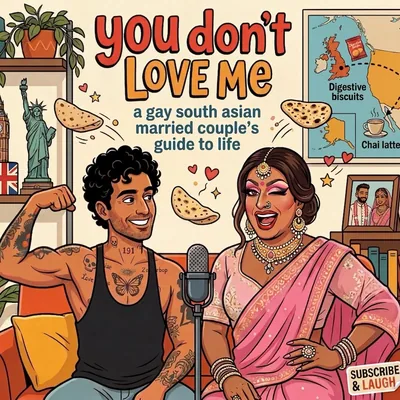
Aamir & Amir
@youdontlovemeboys
303K
3.4% ER
Marlies Johanna
@marliesjohanna
300.7K
3.2% ER

José Rolón
@nycgaydad
273.8K
18.9% ER

mademoisellesoph
@mademoisellesoph
269.1K
1.4% ER
Mom Life | Parenting | Pop Culture
@themomroom
244.5K
0.8% ER

Rob Gorski | Autism Parenting Support
@theautismdad
203.8K
0.3% ER

Jennifer Smith
@unveiledwife
158.3K
1.7% ER
This is just the top of the list — millions of profiles across several social networks
Sign up free to browse the full segment, filter by size, engagement and location, and export shortlists.
Unlock the full list — free
instme Top Parenting & Family Podcasters — ranked live
About the parenting & family podcasters space
What parents expect from parenting podcast hosts
Parents come to parenting podcasters for reassurance, practical language, and the feeling that someone has been through the same stage before. The strongest creators in this segment translate messy family questions into clear conversations: sleep struggles, feeding, tantrums, school transitions, screen time, co-parenting, postpartum recovery, pregnancy after loss, neurodivergence, and the emotional load of caregiving.
The creator mix is broad. Some are clinicians, child-development specialists, therapists, educators, midwives, or lactation consultants who use podcasting to explain evidence-based guidance. Others are parent-led hosts who build trust through diary-style storytelling, humor, interviews, or couple conversations. There are also niche formats around single parenting, blended families, adoption, special needs, faith-based parenting, and working-parent routines.
On Instagram, YouTube, and TikTok, podcast content usually appears as short video clips, captioned takeaways, episode teasers, behind-the-scenes moments, quote graphics, and Q&A prompts. YouTube may also carry longer video episodes or extended interviews. Audiences are not only listening for information; they are looking for scripts they can use with a child, product decisions they can make with less stress, and a host whose values match their own household.
See how it stacks up next to top podcasters and top music podcasters before you shortlist.
Partnerships that fit family decision-making
Parents respond best when a sponsorship helps solve a real household problem rather than interrupting a sensitive conversation. A diapering, sleep, nutrition, education, insurance, toy, travel, wellness, or household brand needs to fit naturally into the host’s daily context and the audience’s current life stage.
Effective collaborations often use host-read podcast integrations supported by social cutdowns on Instagram, YouTube, or TikTok. A useful pattern is to pair a personal story with a clear demonstration: how a product fits into bedtime, what a parent packed for daycare, how a learning tool is used after school, or why a service reduces planning friction. Episode sponsorships can work well when the topic and product are aligned, such as a sleep-focused episode with a bedtime product or a postpartum conversation with a recovery or support resource.
Performance tends to depend on trust, specificity, and the creator’s ability to explain trade-offs. Parenting audiences are cautious; they often compare safety, age fit, ingredients, durability, and expert credibility before acting. Pricing is usually influenced by audience quality, host authority, engagement on social clips, production demands, exclusivity, usage rights, whitelisting or paid amplification needs, category sensitivity, and whether the deliverables include podcast audio, short-form video, YouTube placement, Stories, or link-based calls to action.
For briefs, pricing benchmarks and outreach templates, read our guide to creator marketing for your business.
Signals that a parenting podcast audience is genuinely listening
Parents show trust in comments that describe their own situation, ask follow-up questions, tag partners, or save content for later. For this category, raw size matters less than whether the audience sees the creator as credible enough to influence family routines and purchases.
Aggregate benchmarks can help frame expectations: this segment shows an average follower count of 196,706, an average engagement rate of 7.75%, and a verified share of 40.3%. The account-size mix is weighted toward micro and nano creators, at 40% and 37% respectively, with mid at 16%, macro at 3%, and mega at 4%. That mix is important because smaller parenting hosts may deliver more detailed comment threads and stronger community familiarity, while larger or verified accounts may offer broader awareness and easier media validation.
Useful evaluation metrics include engagement rate, comment quality, saves, shares, story replies, YouTube watch behavior, short-form completion, link activity, audience geography, parent life stage, and sponsor history. Review whether past partnerships were integrated with care or simply inserted into unrelated content. Red flags include unsafe medical claims, rigid advice presented without nuance, frequent child oversharing, comment sections dominated by conflict, sudden engagement spikes, repeated low-effort sponsorships, or content that relies on shame and fear.
Current content trends favor short podcast clips with strong captions, expert myth-busting, realistic routines, postpartum mental health, dad and co-parent perspectives, neurodiversity-aware advice, budget-conscious family decisions, and less performative versions of gentle parenting. The best-fit creators are those whose guidance remains useful even when the algorithmic moment has passed.
Skip the manual checks — InstMe's influencer search platform surfaces these signals automatically in every free report.
Market snapshot
How this segment breaks down by account size and platform — updated Sep 19, 2026.