
Top Art & Design Podcasters
InstMe keeps a live ranking of art & design podcasters across platforms, drawn from an index of millions of profiles across several social networks. The typical account here averages 110.8K followers with a 10.89% engagement rate — real numbers from our monitoring pipeline, not a directory that quietly goes stale.
One thing worth knowing before you scroll: 78% of the creators in this segment are nano or micro accounts (under 100K followers), the tier where engagement runs warmest and collaborations cost the least. Shortlist a few names below, then open any profile for its full free report: growth trend, audience quality, benchmarks and estimated media value.
Millions
Profiles indexed across networks
110.8K
Avg. followers
10.89%
Avg. engagement
73%
Recently active
42.4%
Verified accounts
Top 21 creators
Ranked by followers
benny blanco
@itsbennyblanco
3.4M
4.4% ER
Ben Stiller
@benstiller
2.3M
3.7% ER
Tommi Schmitt
@tommischmitt
997.9K
6.4% ER
𝕄𝕒𝕟𝕕𝕚💋𝕄𝕖𝕫𝕒
@mandimeza
817.1K
1.2% ER
Jerry Saltz
@jerrysaltz
731.1K
0.2% ER
Dexter Carr
@dextercarr
720.7K
1.9% ER
Mr. Kate | DIY and Design
@mrkate
686K
32.4% ER
E M $
@emskopf
476.9K
7.1% ER
Melissa Villaseñor
@melissavcomedy
422.8K
1.3% ER
RJ Rapid Rashmi
@rapidrashmi
410.9K
1.3% ER
Julian Arroyuelo
@julian.arroyuelo
334.5K
3.2% ER
Sylvia Greif
@sylviag_artist
315.3K
0.6% ER
Jennifer Weist
@yaenniverfromtheblock
302.6K
2.4% ER
Evelyn Weigert
@evelynweigert
291.7K
39.4% ER

Thomas Davis
@tomdavis
288.4K
1.3% ER
Ramin Nazer
@raminnazer
280.7K
1.7% ER
Sir ChangSkiii⛷️4️⃣🌎
@nefthepharaoh
250.5K
0.4% ER
Mike Bennett!
@mikebennettart
220.7K
1.6% ER
Valeria J Palmeiro
@cocodavez
208.2K
2.4% ER
Art Simone
@rtist_
201.3K
1.0% ER
R&B Money Podcast
@rnbmoneypodcast
171K
1.1% ER
This is just the top of the list — millions of profiles across several social networks
Sign up free to browse the full segment, filter by size, engagement and location, and export shortlists.
Unlock the full list — free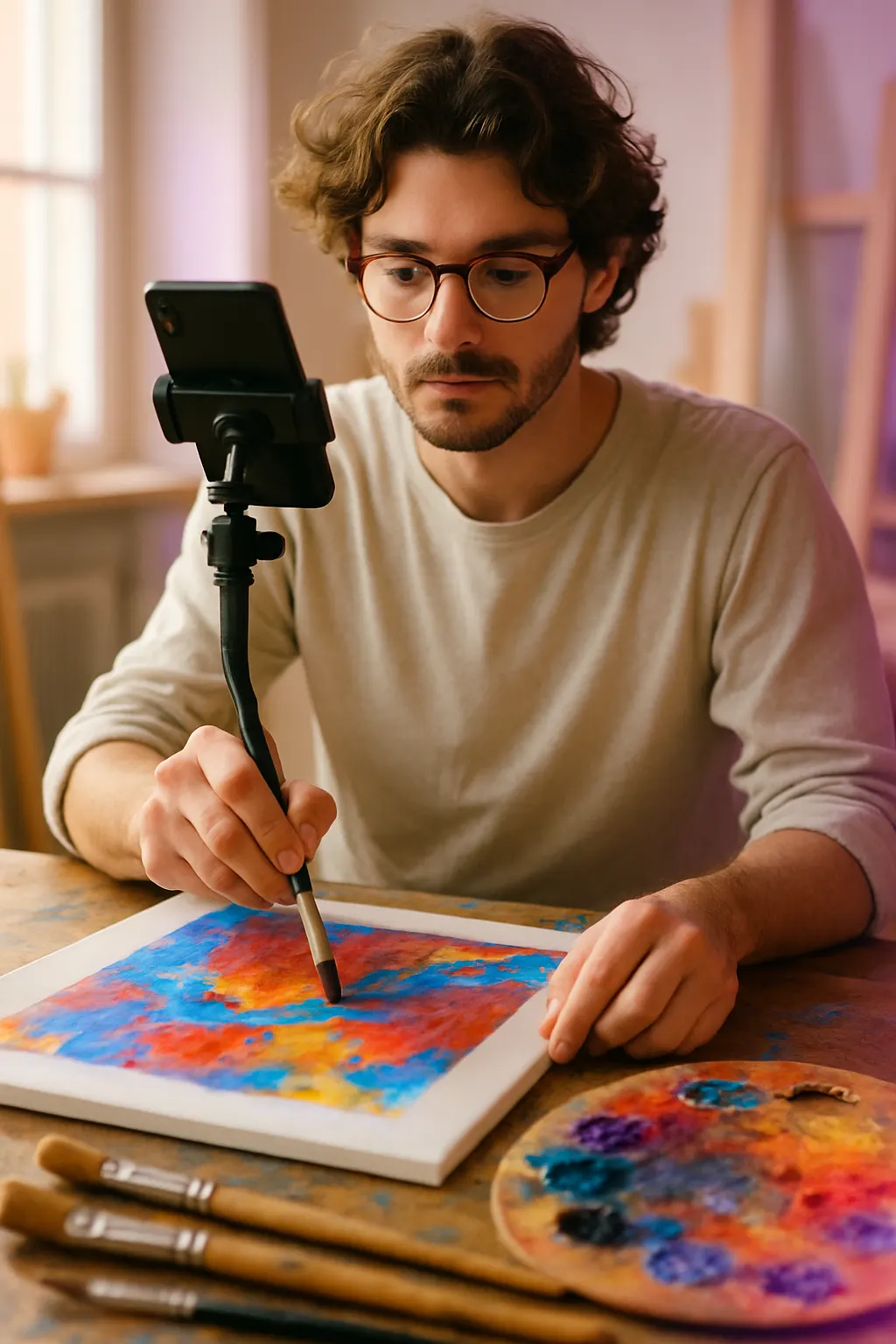
instme Top Art & Design Podcasters — ranked live
About the art & design podcasters space
Inside the studio conversation
A host sits in a painter’s studio, camera angled toward wet canvases, and turns a question about color into a 40-minute discussion of process, failure, collectors, and the artist’s first public show. That is the core appeal of art podcasters: they make visual culture conversational, giving audiences context they do not get from a finished image alone.
This segment includes interview-led art shows, art history explainers, museum and gallery commentary, studio-practice podcasts, market and collecting discussions, criticism, illustration and design conversations, and creator-to-creator panels. Some are audio-first hosts who use Instagram and TikTok for highlights; others publish full video episodes on YouTube with cutdowns for short-form discovery.
Typical archetypes include the curator-host, the working artist documenting peers, the critic with a strong point of view, the educator translating movements and techniques, and the scene connector who knows galleries, residencies, fairs, and local art spaces. Audiences come for access: how artists think, how exhibitions are made, why certain works matter, and how creative careers actually function.
See how it stacks up next to top art & design creators and top music podcasters before you shortlist.
Sponsorships that fit an art-listening habit
The strongest partnerships feel like part of the episode rather than an interruption. Art podcasters can integrate brands through host-read mentions, episode sponsorships, guest-supported conversations, studio visit videos, product trials for creative tools, exhibition or event coverage, and social cutdowns built around a specific theme. For Instagram and TikTok, short clips that pair a sharp quote with strong visuals often work well. On YouTube, longer sponsored segments can land when they are tied to a practical topic, such as preparing work for sale, documenting a portfolio, or setting up a studio.
Categories that tend to fit naturally include art materials, creative software, education, books, cultural events, museums, galleries, framing, printing, travel tied to art fairs, and services for independent creatives. The main performance driver is trust: many listeners treat the host as a filter for what is worth attention in a crowded visual culture.
Pricing is usually shaped by audience quality, platform mix, production effort, host credibility, exclusivity, usage rights, and whether the partnership includes a full episode, short-form edits, event attendance, or cross-posting. Verified status can also matter in this segment; the aggregate verified share is 43.3%, which suggests many accounts have public-facing authority or established recognition.
For briefs, pricing benchmarks and outreach templates, read our guide to creator marketing for your business.
Signals that separate influence from art-world noise
Follower count is useful, but it should not dominate selection. The segment’s average follower count is 150,964, while the average engagement rate is 9.82%; those figures are better read as context than as a guarantee. The account-size mix is broad, with nano at 42% and micro at 35%, alongside mid at 17%, macro at 4%, and mega at 3%. Smaller hosts can be especially valuable when they reach a defined audience of artists, collectors, curators, students, or design professionals.
Important metrics include saves and comments on educational clips, completion and retention on YouTube episodes, repeat guest quality, comment substance, newsletter or event spillover if visible, and whether short clips lead viewers back to full conversations. For art podcasts, audience relevance often matters more than raw reach: a compact following of working artists or museum-goers may outperform a larger but unfocused entertainment audience.
Red flags include generic reposting with little original commentary, inflated engagement from irrelevant comments, inconsistent publishing, unclear disclosure, poor audio or video quality, and a mismatch between the host’s stated expertise and the guests or topics covered. Also check whether the creator can show the artwork clearly; art content loses value when visuals are badly lit or poorly credited.
Current trends include video-first podcasting, studio walkthroughs, short clips built around one memorable idea, explainers connecting historical references to contemporary work, and candid conversations about creative labor, pricing, burnout, and AI-assisted image making.
Skip the manual checks — InstMe's influencer search platform surfaces these signals automatically in every free report.
Market snapshot
How this segment breaks down by account size and platform — updated Sep 19, 2026.