
Top Fitness Creators in Los Angeles
How does the market for fitness creators in Los Angeles actually look? In short: the segment averages 63K followers at 9.07% engagement, and 89% of it is nano or micro accounts — the tier most brands lean on for authentic, budget-friendly collaborations. The data comes from InstMe's index of millions of profiles across several social networks.
Below you'll find the current top creators, a snapshot of how the segment splits by account size and platform, and answers to the questions brands ask us most. Everything refreshes automatically as our pipeline rescans profiles.
Millions
Profiles indexed across networks
63K
Avg. followers
9.07%
Avg. engagement
65%
Recently active
43.9%
Verified accounts
Top 21 creators
Ranked by followers
Barbie Blank Coba
@thebarbieblank
1.2M
2.2% ER

John Gaines
@gainsbygaines
267.8K
1.2% ER
Tasha Franken
@tashafranken
127.4K
0.7% ER
Nicole ThePole Williams
@nicolethepole
113.8K
2.2% ER

MILA MARANDI
@mila.esm
109.9K
0.2% ER
KaLi-La ✨ ONLINE COACH || PERSONAL TRAINER || PRO DANCER
@kalaaila
87.4K
4.8% ER
Candice Heiden
@candai
81.2K
4.4% ER
Jenny Beristain || Women’s Health & Fitness Coach
@jennyylynne
47.2K
12.5% ER

Katrina Jean Carter
@lakatwoman.og
46K
0.7% ER
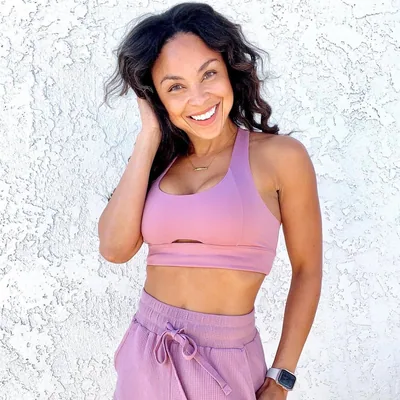
Chevy Laurent
@chevylaurent
40K
0.1% ER
ANITA KAY
@anitaaalvarez
35.6K
6.5% ER

Cady Hannah
@happinessbycady
33.6K
8.8% ER
Bohdan Vysochanskyi
@bovl_boxing_
32.2K
3.0% ER
Stefania Uche Okolie
@stefaniaokolie
31.7K
0.2% ER
Carol Borjas
@caroljborjas
27.6K
2.6% ER

Tyla Buff
@tyla_buff
24.6K
27.5% ER
Karl Warden
@karlwarden
23K
1.5% ER

Alex Caccamo
@alxcac
21.2K
22.5% ER
Steve Avila
@stevelavila
18.6K
87.1% ER
Valeriia Aleksandra
@lil.val_
18.1K
11.9% ER
⚡️Supaman⚡️
@supa__man
15.6K
0.8% ER
This is just the top of the list — millions of profiles across several social networks
Sign up free to browse the full segment, filter by size, engagement and location, and export shortlists.
Unlock the full list — free
instme Top Fitness Creators in Los Angeles — ranked live
About the fitness creators in los angeles space
LA fitness content sits at the intersection of training, lifestyle, and place
Los Angeles fitness creators are rarely just posting workout clips. The city shapes the content: outdoor stair sessions, beach conditioning, gym-floor strength work, studio classes, wellness routines, hiking, run-club culture, and recovery content all appear alongside the usual exercise tutorials. Audiences often follow for a mix of practical programming and aspirational routine-setting: what to do in the gym, where to train, how to eat around a busy schedule, and how fitness fits into a visible local lifestyle.
Common archetypes include personal trainers demonstrating form, group fitness instructors building community around classes, bodybuilding and strength creators, Pilates and yoga specialists, runners and hybrid athletes, wellness creators focused on mobility or recovery, and transformation-led accounts documenting progress. Formats vary by platform: Instagram often carries Reels, carousels, and lifestyle posts; TikTok rewards quick demonstrations, challenges, and candid training moments; YouTube is better suited to longer workouts, coaching explanations, and day-in-the-life formats.
Benchmark it against top fitness creators and top music creators in Los Angeles, ranked from the same live index.
What tends to work in LA fitness partnerships
The strongest partnerships usually feel usable, not just visually polished. A trainer explaining how a product fits into a pre-workout routine, a Pilates instructor showing recovery tools after class, or a runner testing apparel during an actual route will often be more credible than a generic product hold. In this segment, location can be part of the creative: shoots in recognizable outdoor settings, studio environments, gyms, and neighborhood routes help make the post feel grounded in Los Angeles rather than interchangeable fitness content.
Formats that tend to fit include short workout demonstrations, class or event integrations, product-in-routine videos, recipe or supplement usage content, apparel try-ons during real movement, and longer YouTube reviews for equipment or programs. Performance is often driven by clarity: viewers should understand who the creator trains, what problem the product solves, and whether the creator would plausibly use it without the campaign.
Pricing is usually influenced by audience size, verified status, production quality, training credentials, usage rights, exclusivity, platform mix, turnaround time, and whether the creator is also expected to attend an event, host a class, or produce multiple assets. Local relevance can also matter: a smaller creator with a highly engaged LA training community may be more valuable for a gym opening, studio launch, or retail activation than a larger account with a diffuse audience.
Turn this research into results with our step-by-step guide to influencer marketing for health & wellness brands.
Signals that separate useful LA fitness creators from broad reach accounts
Size alone is a weak filter in this category. The aggregate profile for Los Angeles fitness creators shows an average following of 65,186 and an average engagement rate of 9.90%, with micro and nano accounts making up most of the account-size mix. That matters because fitness decisions are often trust-based: followers respond to creators who demonstrate consistency, knowledge, and visible participation in the routines they recommend. The verified share, at 44.7%, is also notable, but verification should be treated as one signal rather than proof of influence.
Useful metrics include engagement rate by format, saves on instructional posts, comments asking for advice, view retention on workout videos, audience geography, follower growth quality, and the ratio of educational content to sponsored content. For local campaigns, check whether the audience actually interacts with LA-specific posts, events, gyms, routes, or studios. A creator may look fitness-relevant but still have an audience that is more entertainment-driven than purchase- or attendance-ready.
Red flags include unsafe exercise instruction, exaggerated body claims, inconsistent posting, repetitive sponsorships with little explanation, heavy editing that undermines credibility, comment sections filled with generic responses, and engagement spikes that do not match the creator’s normal content pattern. Current trends worth tracking include hybrid training, Pilates and strength combinations, run clubs, recovery and mobility, realistic meal prep, wearable-driven training updates, and short-form form checks. InstMe can help compare these signals across Instagram, YouTube, and TikTok without relying only on follower count.
You don't have to check these by hand: InstMe's influencer discovery platform bakes them into every free report.
Market snapshot
How this segment breaks down by account size and platform — updated Sep 19, 2026.