
Top Education Creators in the USA
This is InstMe's live ranking of education creators in the USA: creators measured on audience size, engagement and posting activity, surfaced from an index of millions of profiles across several social networks. Averages for the segment right now: 77.1K followers and 5.60% engagement.
Brands usually start at the top of the list, but the best opportunities often hide a little deeper — smaller creators here out-engage the big accounts more often than not. Open any profile for its full free report, or create a free account to search, filter and export the entire segment.
Millions
Profiles indexed across networks
77.1K
Avg. followers
5.60%
Avg. engagement
79%
Recently active
21.2%
Verified accounts
Top 21 creators
Ranked by followers
LK Logic
@lklogic_math
6M
0.0% ER
Lewis Howes
@lewishowes
4.8M
1.7% ER
Jillian Turecki
@jillianturecki
3.8M
1.5% ER
Martha Stewart
@marthastewart48
3M
0.1% ER
English with Mohim
@englishwithmohim
2.4M
0.0% ER
Lily Jay
@real.lilyjay
2.4M
15.6% ER
Diksha Arora
@edu_dikshaarora
2M
0.2% ER
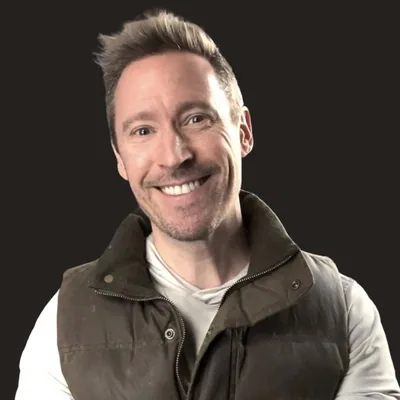
Tyler Gardner
@socialcapofficial
1.9M
0.2% ER
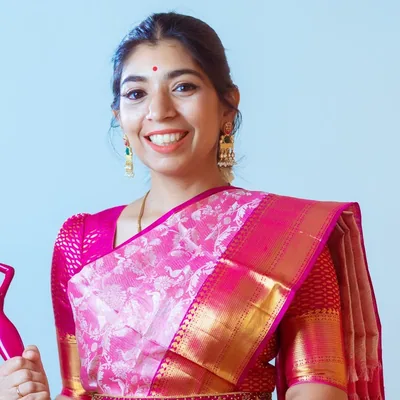
Anupama Kumar Vijay Anand
@anupama.vriksham
1.8M
0.8% ER
Alabama Football
@alabamafbl
1.6M
1.2% ER
Stanford University
@stanford
1.4M
0.2% ER
SHARON McMAHON
@sharonsaysso
1.4M
1.6% ER
Professor Poutine
@trevors_history_reels
1.3M
3.4% ER
Ganeshprasad Sridharan
@thethinkschool
1.3M
0.4% ER

Dr. Umar Johnson, Psy.D,CSP,M.Ed
@drumarjohnson
1.3M
0.1% ER

Ashu Ghai
@ashu.ghai
1.2M
34.3% ER
S O P H I E D A V I D ⭐️
@littlehappylearners
1.2M
1.0% ER

Jordan Syatt
@syattfitness
1.1M
1.0% ER
The School of Greatness
@greatness
1.1M
0.2% ER
Ammy Arora
@amy_chhabra
1.1M
2.3% ER
Steven Gao
@stevenmotocooks
1.1M
1.8% ER
This is just the top of the list — millions of profiles across several social networks
Sign up free to browse the full segment, filter by size, engagement and location, and export shortlists.
Unlock the full list — free
instme Top Education Creators in the USA — ranked live
About the education creators in the usa space
What U.S. education audiences expect from creator-led learning
Viewers come to education creators for clarity, structure, and a sense that a topic is manageable. In the U.S., this can mean a parent looking for phonics support, a high school student preparing for exams, a college applicant decoding financial aid, a professional learning a software tool, or an adult exploring history, science, personal finance, or language learning outside a classroom.
The segment spans K–12 explainers, test prep, college admissions, teacher content, STEM demonstrations, study skills, career education, special education resources, language learning, edtech tutorials, and practical life-skills instruction. Formats vary by platform: TikTok is often used for quick explanations, classroom moments, and study hacks; Instagram supports carousels, Reels, lesson snippets, and downloadable-style prompts; YouTube is stronger for long-form tutorials, curriculum sequences, walkthroughs, and lecture-style content.
Common archetypes include classroom teachers translating daily practice into content, tutors and coaches with a specific academic focus, professors and researchers simplifying complex topics, edtech reviewers, homeschooling educators, and creators who teach through entertainment. Audiences usually return when the creator’s explanations are accurate, repeatable, and easy to apply.
See how it stacks up next to top creators in the USA and top music creators in the USA before you shortlist.
Sponsorships that fit how learners actually use education content
Learners do not usually watch education content to be entertained alone; they want a next step. That makes practical integrations more natural than broad awareness spots. A study app, learning platform, book, classroom tool, software product, or financial-literacy resource tends to work best when the creator can show how it solves a recognizable learning problem.
Effective formats include tutorial integrations, “study with me” routines, classroom demonstrations, challenge-based learning series, before-and-after skill improvement, curriculum-adjacent explainers, and resource roundups. On YouTube, a sponsor can be built into a longer lesson or workflow. On TikTok and Instagram, concise problem-solution videos, carousel guides, and short demonstrations often fit the way audiences save and share educational content.
Performance is usually tied to trust. Creators who have a consistent teaching voice, disclose partnerships clearly, and only recommend relevant tools can protect credibility while still converting interest. Pricing is influenced by audience size, engagement quality, platform mix, production effort, subject specialization, usage rights, exclusivity, seasonality, and the level of review needed for claims. Education campaigns may also require extra care around minors, classroom settings, financial claims, or academic outcomes.
For briefs, pricing benchmarks and outreach templates, read our guide to creator marketing for your business.
Signals that separate useful reach from classroom-style authority
Audiences judge education creators by whether they learn something they can remember or use. Marketers should look beyond follower count and check whether comments show comprehension, follow-up questions, saved-content behavior, and repeat viewing. In this segment, a smaller creator with a focused audience can outperform a larger generalist if the content matches the product and the teaching method is trusted.
The aggregate profile for U.S. education creators shows an average follower count of 105,347, an average engagement rate of 5.22%, and a verified share of 29.1%. The account-size mix is weighted toward micro creators at 45% and nano creators at 37%, with mid accounts at 13%, macro accounts at 2%, and mega accounts at 2%. These figures make it important to compare creators within their role: a classroom teacher, admissions advisor, STEM explainer, and productivity educator may have very different audience behaviors.
Useful checks include audience location, age suitability, comment quality, consistency of posting, source transparency, and whether sponsored content performs similarly to organic lessons. Red flags include unsupported educational or financial claims, misleading credential language, recycled viral tips without substance, poor disclosure, and content that depends on student privacy. Current trends include short-form concept breakdowns, AI-literacy education, career switching content, college cost guidance, teacher-life storytelling, and YouTube series that organize learning into repeatable modules.
Skip the manual checks — InstMe's influencer search platform surfaces these signals automatically in every free report.
Market snapshot
How this segment breaks down by account size and platform — updated Sep 19, 2026.
Frequently asked questions
Related niches
Narrow it down
Broader segments
Charts for this market
Metric leaderboards for Instagram accounts in the USA — ranked by the numbers, refreshed daily.