
Top Art & Design Creators in the Netherlands
InstMe keeps a live ranking of art & design creators in the Netherlands across platforms, drawn from an index of millions of profiles across several social networks. The typical account here averages 81.4K followers with a 7.96% engagement rate — real numbers from our monitoring pipeline, not a directory that quietly goes stale.
One thing worth knowing before you scroll: 87% of the creators in this segment are nano or micro accounts (under 100K followers), the tier where engagement runs warmest and collaborations cost the least. Shortlist a few names below, then open any profile for its full free report: growth trend, audience quality, benchmarks and estimated media value.
Millions
Profiles indexed across networks
81.4K
Avg. followers
7.96%
Avg. engagement
75%
Recently active
22.9%
Verified accounts
Top 21 creators
Ranked by followers
Melisa Aslı Yazıcı
@melisapamuk
5.9M
2.0% ER
L E T I T H A P P E N
@norah_yarah_rosa
1.2M
14.9% ER
joyce Spakman
@candymakeupartist
578K
5.9% ER
Rinske Douna
@rinskedouna
272.9K
10.1% ER
AFRO BROS - BOOTYBEATS GANG
@afrobros
229K
7.8% ER
Guus Meeuwis
@guus.meeuwis
201K
2.1% ER
Matheus Lodewijk
@tludowic
192.5K
15.7% ER
TEFAF
@tefaf
188.4K
0.2% ER
Jurgen Vermaire
@lets_talk_about_art
168.6K
0.9% ER
Yves Berendse
@yvesberendse
134.8K
8.2% ER
𝑨 𝑯𝒖𝒎𝒂𝒏 𝑬𝒏𝒔ō
@kevin_paradox
123.3K
9.1% ER
Jeroen van Eerden | Logo & Identity
@jeroenvaneerden
121.2K
0.2% ER
Ginton
@gintonmusic
120.7K
1.1% ER
Frontliner
@djfrontliner
108.2K
3.3% ER

peeta_ead
@peeta_ead
106.6K
2.8% ER
Aiko Graven
@aikograven
104.5K
0.1% ER
Manifesta Biennial
@manifestabiennial
103.3K
0.4% ER
Shelter Amsterdam
@shelteramsterdam
100.7K
0.7% ER
Studio Job
@studiojobofficial
82.9K
0.1% ER
Mensa
@mensa
73.1K
34.2% ER
Xander de Buisonjé
@xdebuisonje
69.4K
2.9% ER
This is just the top of the list — millions of profiles across several social networks
Sign up free to browse the full segment, filter by size, engagement and location, and export shortlists.
Unlock the full list — free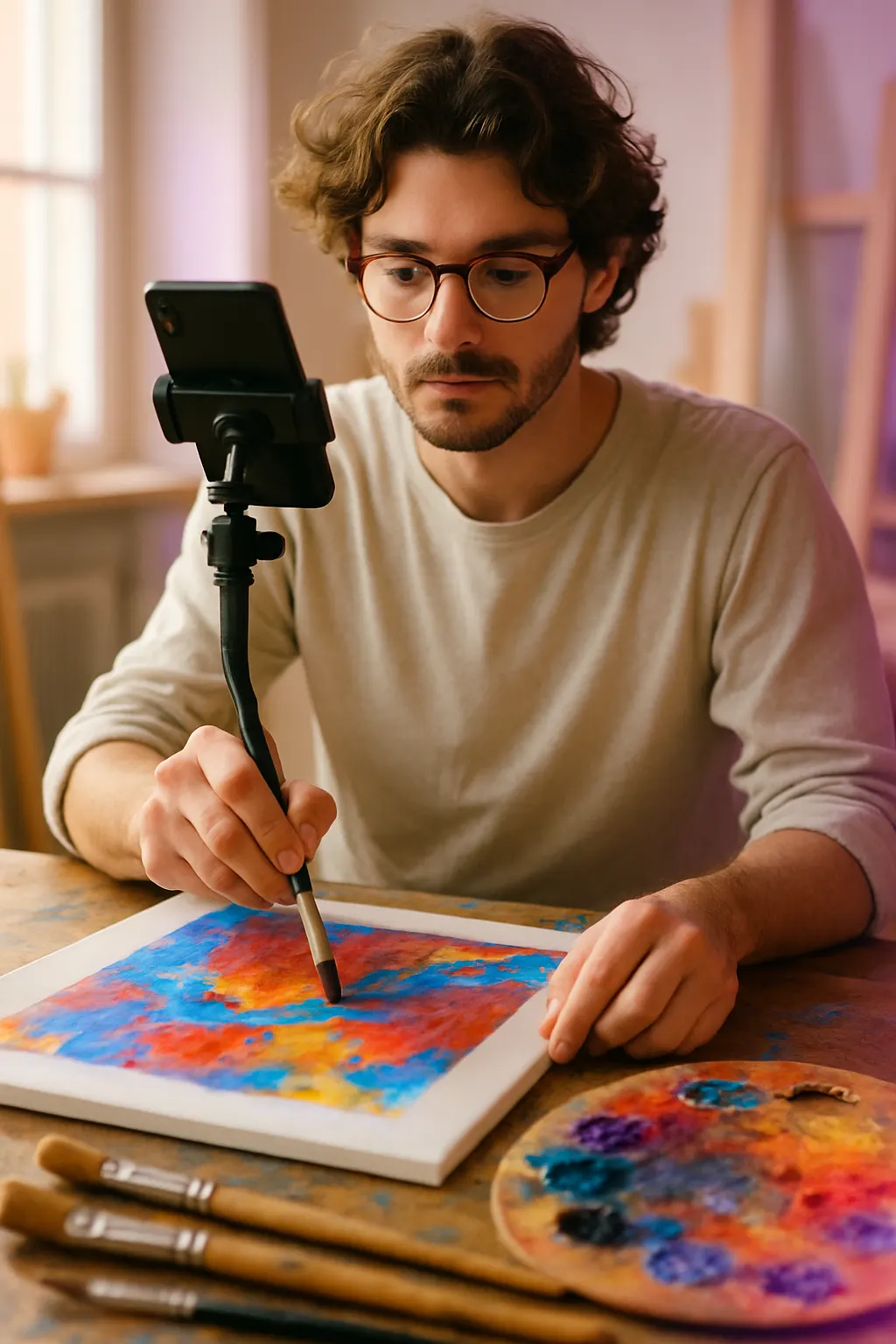
instme Top Art & Design Creators in the Netherlands — ranked live
About the art & design creators in the netherlands space
Dutch studio practice, museum sketches, and process-led art feeds
A reel begins with a canal-side sketch in Amsterdam: grey water, brick façades, a quick wash of blue, then a cut to the finished gouache taped to a studio wall. That kind of compact process storytelling is common among art creators in the Netherlands, alongside ceramics, illustration, mural painting, textile work, graphic design, digital art, tattoo flash, printmaking, and contemporary gallery documentation.
Audiences come for more than a finished image. They watch brush choices, pigment tests, kiln reveals, framing decisions, art-school routines, market prep, and exhibition walkthroughs. On Instagram, carousels often show a work moving from reference to detail shots to installation. TikTok favors time-lapse, studio resets, satisfying material handling, and candid commentary on creative blocks or selling work. YouTube is better suited to longer studio vlogs, tutorials, artist interviews, and behind-the-scenes documentation of commissions.
Typical creator archetypes include independent fine artists, illustrators with shop drops, designers who cross into art objects, art students documenting growth, museum and gallery explainers, urban sketchers, and makers tied to local creative markets. Dutch context matters: creators may mix English and Dutch, reference local cities, and balance international art discourse with everyday studio accessibility.
Benchmark it against top art & design creators on Instagram in the Netherlands and top art & design creators, ranked from the same live index.
Campaign formats that fit visual craft and creative trust
Art partnerships work best when the brand gives the creator a real making task rather than a generic placement. Strong formats include sponsored materials tests, limited-edition artworks, packaging illustration, live painting, studio-day integrations, exhibition or event coverage, and content around tools used in the creator’s normal workflow. For lifestyle brands, an artwork can become the campaign asset itself; for product brands, the value often sits in showing how a tool performs under close visual scrutiny.
Process usually outperforms static announcement posts because the audience can see judgment, experimentation, and skill. A paint, tablet, paper, frame, camera, lamp, or interior product becomes more credible when it appears inside a natural studio sequence. Short videos can show transformation quickly, while carousels preserve detail and are useful for saves. Longer YouTube pieces can support more technical products or launches that need explanation.
Price is influenced by creative labor as much as audience size. A creator who must produce an original artwork, license usage rights, attend an event, or provide campaign assets is not simply posting content. Fees may rise with concept development, production complexity, exclusivity, paid media usage, rush timelines, and whether the brand wants the artwork itself. Verification can also affect negotiations; in this segment, 26.9% of profiles are verified, so a blue check may signal public presence but should not be treated as the only indicator of fit.
Turn this research into results with our step-by-step guide to creator marketing for brands.
Reading art performance beyond follower counts
The Dutch art segment is heavily weighted toward smaller accounts: nano profiles make up 63% of the mix, micro profiles 29%, mid-size 6%, and mega 1%, with no macro share shown in the provided mix. That structure makes engagement quality especially important. The average follower count is 73,374 and the average engagement rate is 9.03%, but individual creators should be judged by how their audience responds to specific formats, not by averages alone.
Useful signals include saves on tutorials or process breakdowns, comment depth on finished work, repeat buyers or collectors appearing in discussion, story interactions around shop drops, and consistency between views, likes, and comments. For Instagram, look closely at carousel performance and reel retention. On TikTok, distinguish viral craft moments from sustained audience interest. On YouTube, completion cues, comment relevance, and series consistency matter more than a single high-view video.
Red flags include portfolios that change style only to chase trends, engagement dominated by vague emoji comments, sudden mismatches between follower size and recent interaction, undisclosed reposted art, or brand work that feels detached from the creator’s practice. Current trends worth watching include tactile studio ASMR, sketchbook tours, small-space studio organization, sustainable materials, art-market transparency, and creator-led education. The strongest partners usually have a recognizable visual language, clear authorship, and an audience that asks practical questions about the work.
You don't have to check these by hand: InstMe's influencer discovery platform bakes them into every free report.
Market snapshot
How this segment breaks down by account size and platform — updated Sep 19, 2026.
Frequently asked questions
Related niches
Narrow it down
Broader segments
Charts for this market
Metric leaderboards for Instagram accounts in the Netherlands — ranked by the numbers, refreshed daily.